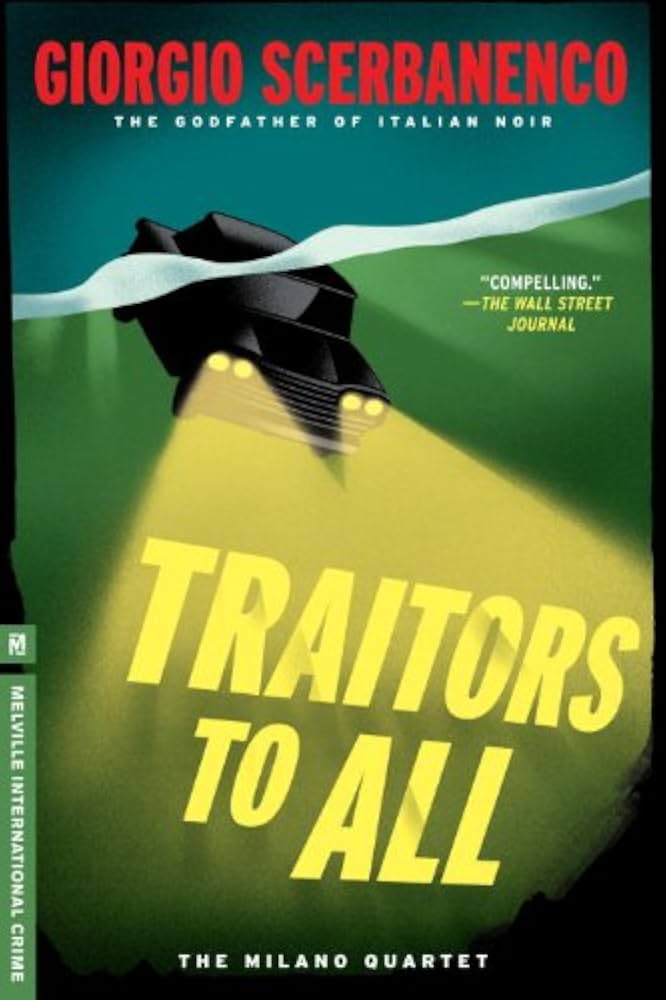
Rating: 7/10 · Translated from Italian; English edition 2015
- Plot: A middle-aged couple drown when their car plunges into a Milan canal, and Duca Lamberti finds the accident was an execution tied to wartime betrayals.
- Clues: Few but pointed; the investigation moves through informers, a young woman with a grudge, and old partisan memories.
- Reveal: Hard and unsentimental, with the justice meted out as troubling as the crimes.
- Science bonus: Lamberti was a doctor, and his medical training shapes how he reads bodies, injuries and people.
Duca Lamberti was a doctor until he helped a dying patient end her life and went to prison for it. Struck off, he now works alongside the Milan police, an outsider with medical knowledge, bitter humour and a strong moral code of his own.
In Traitors to All, the second of four Lamberti novels, a car containing a middle-aged couple goes into one of Milan’s canals. The deaths look accidental. They are not. Lamberti follows the case into Milan’s underworld, a drug trade stretching toward America, and back into the war, when partisans and informers made choices that still have consequences.
Giorgio Scerbanenco, born in Kyiv and raised in Italy, is often called the father of Italian noir, and it is easy to see why. His Milan is a boom city of new money, factories, nightclubs and fear. His prose is abrupt and intense, and the violence is sudden and ugly.
The novel won France’s Grand Prix de Littérature Policière, and it deserves the recognition for its moral seriousness. Lamberti is not a righteous avenger. He is a man trying to act decently in a world where the law often fails.
The book’s flaws are melodrama and haste. Some characters, especially women, are drawn in lurid strokes. The plot turns on coincidences.
The 7 reflects a raw, fascinating novel that reached English readers half a century late. It opens a window on the Italian economic miracle’s dark side, and it shows where Italy’s modern crime fiction came from.


Leave a Reply