RatiRating: 7/10 · Translated from Japanese; English edition 1989
- Accuracy: Built on the Korean chronicles of the Goryeo kingdom’s forced shipbuilding for the Mongol invasions of Japan in 1274 and 1281.
- Readability: Austere and documentary, with long passages close to chronicle.
- Plot: Korea, crushed by Mongol conquest, is ordered by Kublai Khan to build and man fleets to invade Japan, and pays the price twice.
- Science bonus: Much of the book is engineering and logistics, showing how many ships, how much timber and grain, and how many workers the invasion fleets demanded.
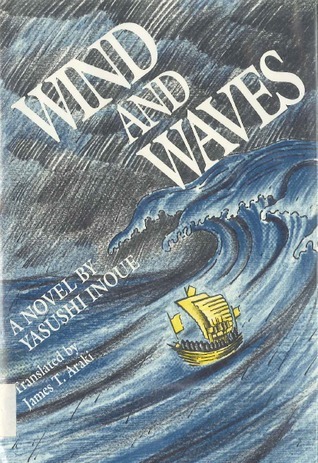
In the thirteenth century the Mongols subdued the Korean kingdom of Goryeo. When Kublai Khan decided to invade Japan, he ordered the Koreans to build the ships, supply the grain and provide the sailors. Wind and Waves tells that story from the Korean side.
Yasushi Inoue approaches it with his characteristic detachment. The protagonists are Korean kings and officials trying to protect their exhausted people from impossible demands, negotiating with Mongol envoys and trying to delay, obey and survive at once. The Japanese, the eventual targets, barely appear.
The result is an unusual perspective on a famous episode. In Japanese memory the invasions are remembered through the kamikaze, the divine winds that wrecked the fleets. Inoue shows the cost to the people who were forced to build those fleets and who died in them.
The writing is spare, closer to chronicle than conventional fiction. Dates, orders, quantities of timber and grain matter. Human beings emerge through their decisions more than through dialogue or inner life.
That is also the book’s limit. Readers who want character or drama will find it cold and slow. The English translation, arriving in 1989, is faithful but does nothing to warm it up.
The 7 reflects a serious and illuminating book that offers a genuinely different view of a well-known history. It is less moving than The Roof Tile of Tempyō, but as a study of how empires use smaller nations, it is sharp and still relevant.


Leave a Reply