Rating: 6/10 · Translated from Spanish
- Plot: A private detective in Mexico City juggles three cases, including the rumour that Emiliano Zapata is still alive.
- Clues: Loose and sometimes absurd; atmosphere and politics matter more.
- Reveal: Partial and ironic, in keeping with the book’s view of Mexico.
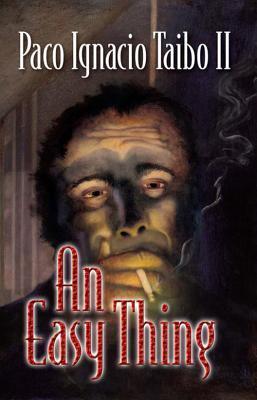
Héctor Belascoarán Shayne was an engineer with a comfortable life. After a crisis he left his job, took a correspondence course, and became a private detective in Mexico City. In An Easy Thing he takes on three cases: the murder of an engineer at a factory, threats to a young woman, and the question of whether Emiliano Zapata, the revolutionary hero killed in 1919, is secretly alive in a cave.
Paco Ignacio Taibo II, a Spanish-born Mexican writer and activist, created in Belascoarán a detective who is both hard-boiled and absurd. He wears an eye patch, has a scar, shares his office with a plumber and an upholsterer, and is committed to the idea that a detective can do something against corruption.
The novel’s energy comes from its setting. Mexico City in the 1970s is chaotic, polluted and full of violence, political repression and ordinary life. Taibo writes about it with love and anger. The Zapata case, a mixture of history and myth, is the book’s heart.
The drawbacks are structure and style. The cases are loosely related, the pace is erratic, and some of the humour is broad. The translation, like the original, is rough-edged.
The 6 reflects an energetic, political and original book. It is an important example of Latin American neo-noir, but readers wanting tight plotting will be disappointed.


Leave a Reply