Rating: 7/10
- Plot: A Zuni boy is murdered and his Navajo friend disappears just before a sacred ceremony, and Joe Leaphorn must work across cultures to find him.
- Clues: Cultural and physical, from tracks and flint to religious rules about masks and ceremonies.
- Reveal: Plausible and sad, with a solution rooted in outsiders’ ignorance.
- Science bonus: An archaeological dig is central to the plot, and Leaphorn’s tracking and his anthropological understanding of Zuni belief work as disciplined observation.
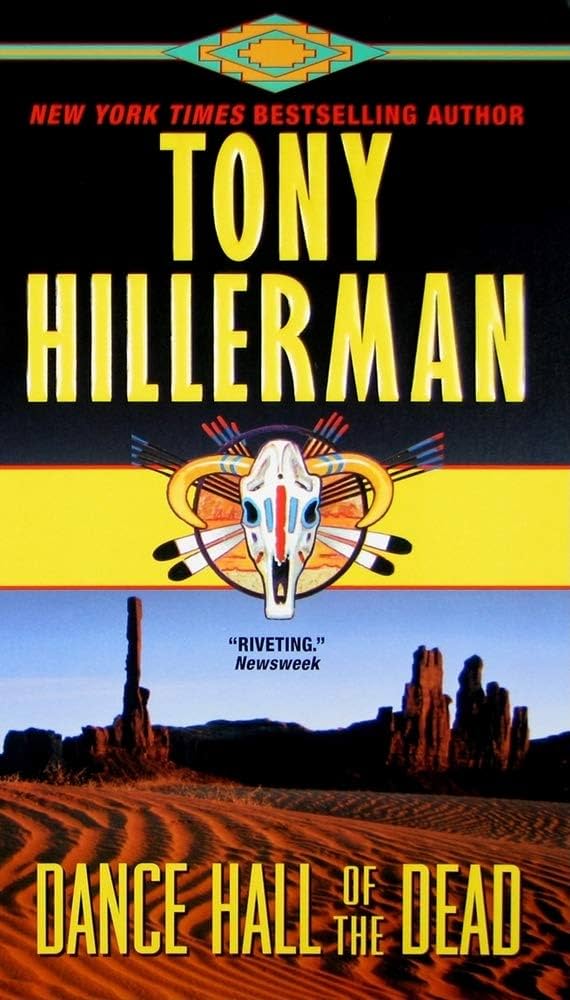
Ernesto Cata, a Zuni boy preparing for a role in the Shalako ceremony, is found dead. His friend George Bowlegs, a Navajo boy, has vanished. Lieutenant Joe Leaphorn of the Navajo Tribal Police joins the search, working with Zuni officers and federal agents, and the trail leads through an archaeological dig and a commune of young white drop-outs.
Tony Hillerman’s great achievement was to make Native American cultures the centre of a mystery series, written with knowledge and respect. Leaphorn is a rationalist, sceptical of traditional religion but deeply knowledgeable about it. He understands that the key to the case lies in how the two boys understood the Zuni spiritual world.
The landscape of the Southwest is superbly evoked: mesas, dry washes, winter light. The Shalako ceremony, with its giant masked figures, gives the book an unforgettable climax.
The novel won the Edgar Award, and it helped make Hillerman one of the most popular crime writers in America.
The weaknesses are thin supporting characters, especially the white outsiders, and a plot that occasionally stalls. Some Zuni readers have questioned how much of their religious life should be depicted by an outsider.
The 7 reflects a humane, atmospheric mystery that opened new territory for the genre. Hillerman’s later books, especially after he paired Leaphorn with Jim Chee, were even richer.


Leave a Reply