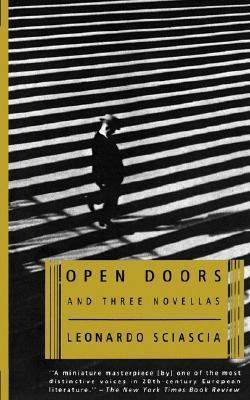
Rating: 8/10 · Translated from Italian (original title Porte aperte)
- Plot: In 1937 Palermo, a judge must try a man who committed three murders, and he refuses to impose the death penalty the Fascist state demands.
- Clues: None; the drama is moral and legal.
- Reveal: The outcome is quiet and bitter, showing the cost of conscience.
In 1937 a man in Palermo kills his wife, the colleague who replaced him in his job, and the man who dismissed him. The Fascist regime has restored the death penalty, and public opinion demands execution. The judge, known only as the little judge, refuses to condemn the man to death.
The title refers to a Fascist boast that under Mussolini, people could sleep with their doors open because crime had been eliminated. Sciascia shows the reality behind the slogan and the pressures placed on judges to serve the state.
The novel is short and dense, full of conversations about law, justice and conscience. The judge’s dialogue with the prosecutor, who represents the regime, is especially powerful.
The weakness is that the novel is more reflection than story, and readers wanting drama may find it static.
The 8 reflects a profound and elegant meditation on the death penalty and individual conscience. Gianni Amelio’s 1990 film starred Gian Maria Volonté.


Leave a Reply