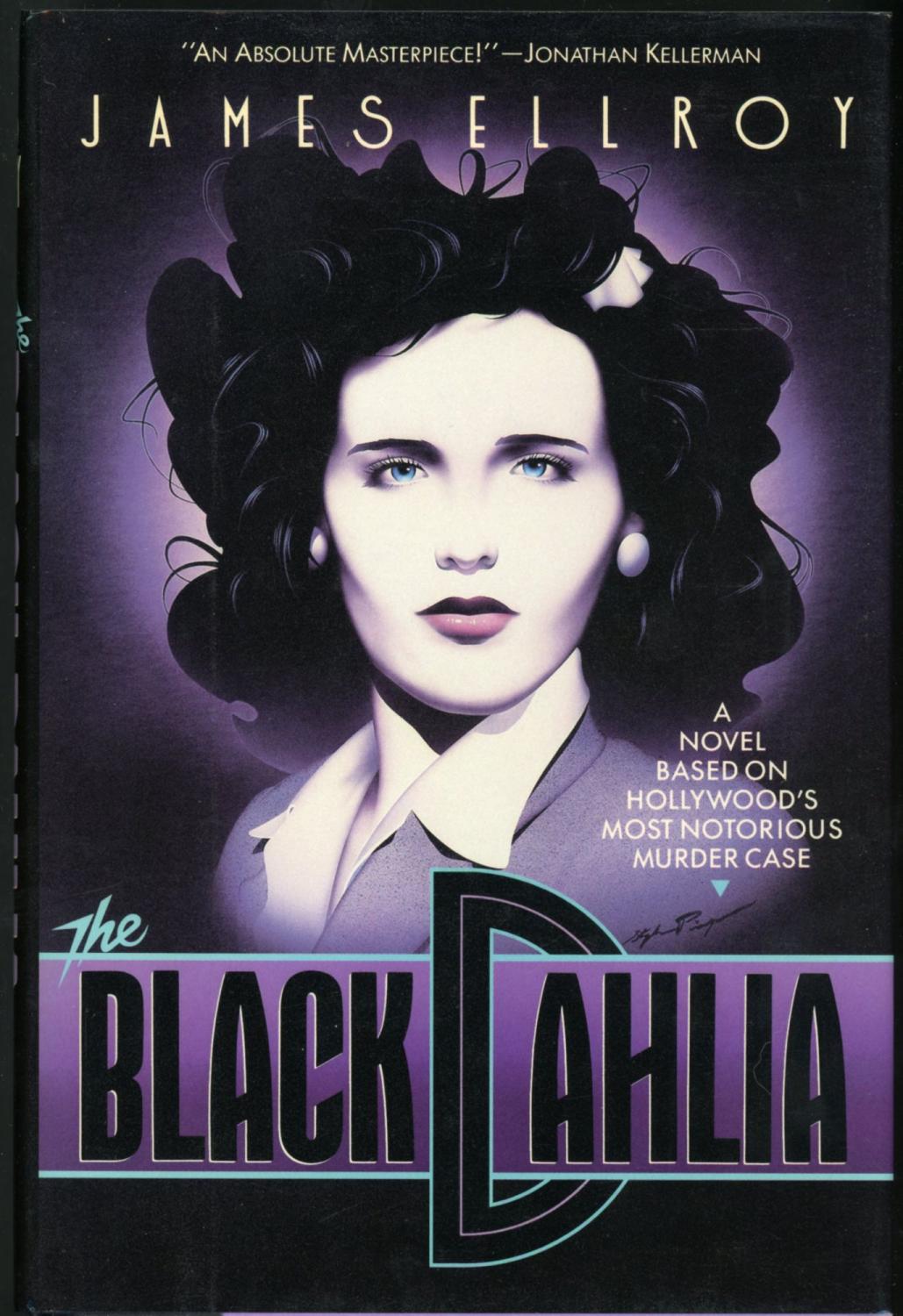
Rating: 8/10
- Plot: Two Los Angeles police officers, both former boxers, become obsessed with the 1947 murder of Elizabeth Short.
- Clues: Found in LA’s underworld of film, pornography and wealth.
- Reveal: Invented, as the real case was never solved, but emotionally powerful.
In January 1947 the mutilated body of Elizabeth Short, a young woman who came to Hollywood hoping for fame, is found in a vacant lot. The press calls her the Black Dahlia. Officers Bucky Bleichert and Lee Blanchard, partners and former boxers, are assigned to the case, and it consumes them.
James Ellroy’s mother was murdered in 1958, and her case was also never solved. His obsession with the Black Dahlia is the source of the novel’s intensity. Bucky narrates in a clipped, feverish voice, and the story plunges into corruption, sexual obsession and violence.
The novel’s portrait of 1940s Los Angeles is extraordinary: police brutality, Hollywood dreams, wealthy families and hidden vice. Ellroy’s style, which would become even more fragmented in later books, is already distinctive.
The solution Ellroy invents is dramatic and grotesque, though some readers find it overwrought. The violence is extreme, and the treatment of women is disturbing, even when that is part of the point.
The 8 reflects a ferocious and original noir, the first of Ellroy’s L.A. Quartet, which continued with The Big Nowhere, L.A. Confidential and White Jazz.


Leave a Reply