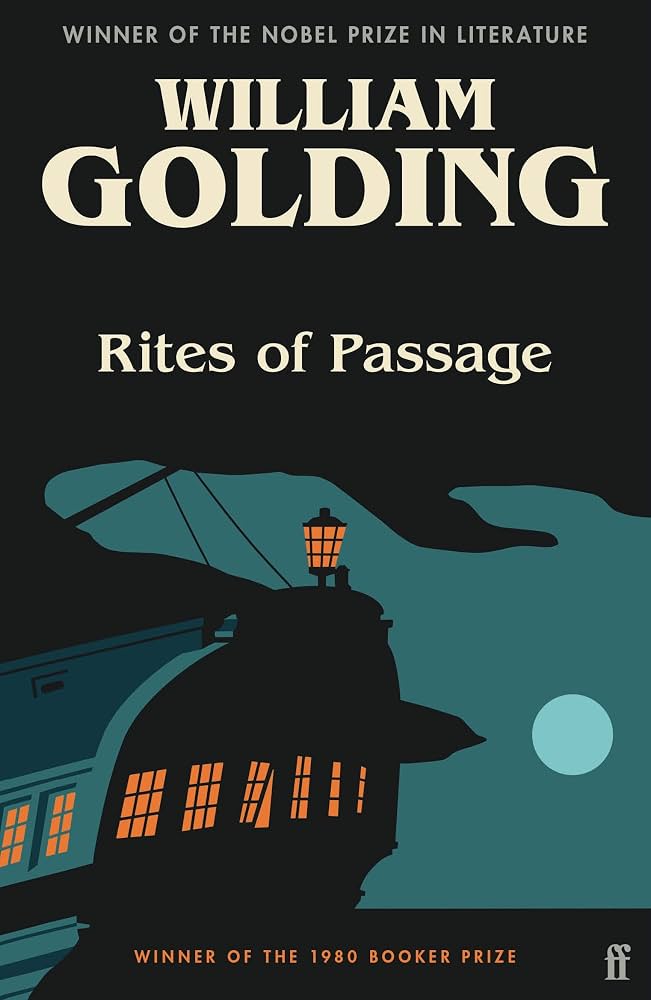
Rating: 8/10
- Accuracy: Convincing on shipboard life and class distinctions in the early nineteenth century, with language adapted from period journals.
- Readability: Witty and dense, with period vocabulary and nautical detail.
- Plot: A young aristocrat’s journal of a voyage to Australia records the humiliation of a clergyman.
Edmund Talbot, a young gentleman with political connections, is travelling to Australia to take up a colonial post. He keeps a journal for his godfather, recording the voyage. At first, he is amused by the ship’s society. Then he becomes involved in the fate of the Reverend Robert Colley, an awkward clergyman who is mocked, humiliated and finally destroyed.
William Golding’s novel is a study of class, cruelty and self-deception. Talbot is snobbish, clever and complacent, and his journal reveals more than he realises. The second part of the book, Colley’s own letter, changes everything.
The ship becomes a microcosm of English society, with officers, passengers and sailors divided by rank. Golding’s knowledge of the sea gives the book authenticity, and his use of language is rich and playful.
The weakness is that the archaic vocabulary and nautical terms can be difficult, and the book’s pace is slow in parts.
The 8 reflects a subtle and powerful novel that won the Booker Prize. It was the first of Golding’s trilogy To the Ends of the Earth, followed by Close Quarters and Fire Down Below. major Academy Awards and made Lecter a cultural icon.


Leave a Reply