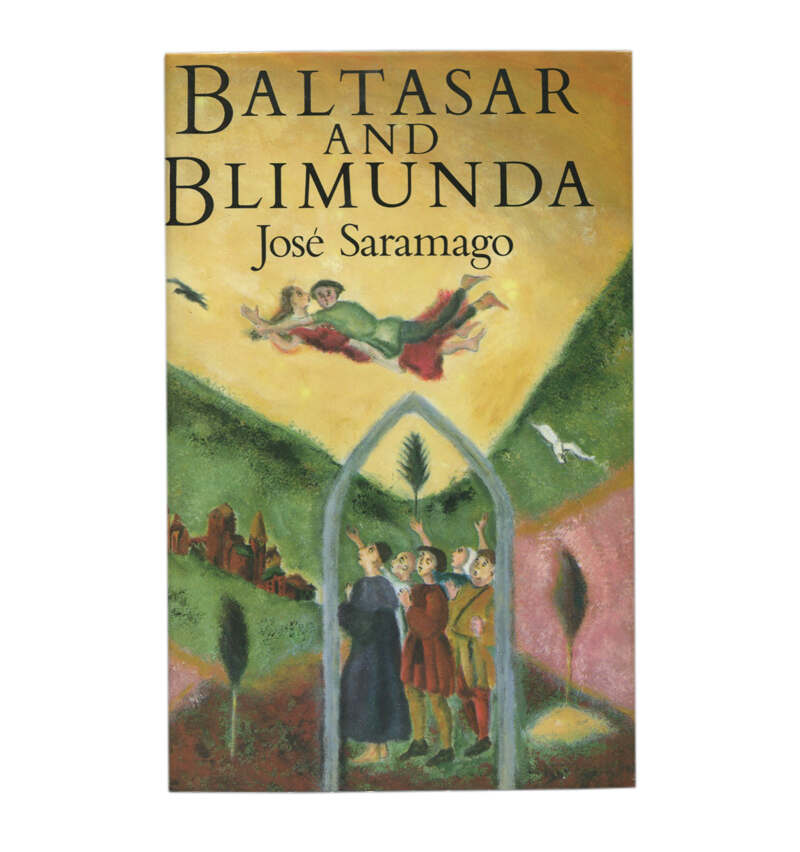
Rating: 8/10 · Translated from Portuguese (original title Memorial do Convento)
- Accuracy: Built on real events in eighteenth-century Portugal, including the building of the Mafra convent and the priest Bartolomeu de Gusmão’s flying machine.
- Readability: Challenging: long sentences, minimal punctuation and no quotation marks.
- Plot: A one-handed soldier and a clairvoyant woman help a priest build a flying machine while the king builds a vast convent.
- Science bonus: The flying machine is based on the real aviation experiments of Bartolomeu de Gusmão, and the novel pits the dream of flight against the Inquisition’s suspicion of inquiry.
King João V of Portugal vows to build a convent at Mafra if his queen bears an heir. Thousands of workers labour for years. Meanwhile Baltasar, a soldier who lost his hand in war, meets Blimunda, a woman who can see inside people’s bodies when she is fasting. They help Padre Bartolomeu Lourenço, who is building a flying machine powered by human wills, which Blimunda collects.
José Saramago’s novel mixes history, fantasy and satire. It criticises the Church, the Inquisition and the monarchy, and celebrates the ordinary people who built Mafra and whose names history ignores. The love story between Baltasar and Blimunda is tender and unconventional.
The style is distinctive, with long sentences and dialogue woven into the narrative. It requires patience but rewards it with rhythm and irony.
The weakness is that the style can be tiring, and some episodes are slow.
The 8 reflects a rich, humane and inventive novel that made Saramago internationally known. He won the Nobel Prize in 1998.


Leave a Reply