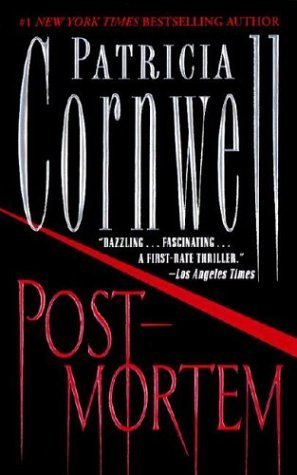
Rating: 7/10
- Plot: A serial killer is strangling women in their homes in Richmond, Virginia, and the chief medical examiner fights both the killer and her political enemies.
- Clues: Forensic and fair: fibres, a strange glittering residue, and the killer’s biology.
- Reveal: Tense and satisfying, though the killer is lightly characterised.
- Science bonus: The case turns on laboratory work, including DNA profiling, trace-evidence analysis and computer data, at a time when these were new to fiction.
Dr Kay Scarpetta is chief medical examiner of Virginia. A killer is breaking into women’s homes and strangling them. Scarpetta works with the gruff detective Pete Marino, fights sexism and political interference, and relies on forensic evidence. Her young niece Lucy, a computer prodigy, plays a role.
Patricia Cornwell had worked in a medical examiner’s office, and her authority shows. The novel’s attention to autopsies and lab work was revolutionary, and it created a new subgenre of forensic thrillers. It won the Edgar, Creasey, Anthony and Macavity awards for best first novel in the same year.
Scarpetta is an engaging heroine, intelligent and vulnerable, and her struggle for professional respect gives the book emotional depth.
The weaknesses are the prose, which is functional, and some melodramatic plotting. The killer is less vivid than the forensic process.
The 7 reflects a groundbreaking and influential crime novel whose science remains its most memorable quality..


Leave a Reply