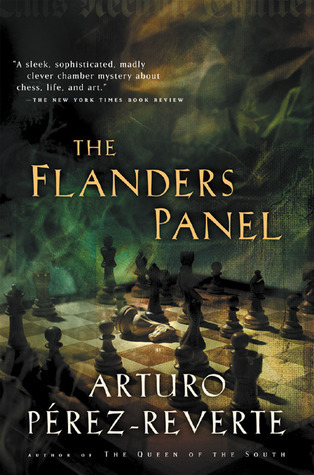
Rating: 8/10 · Translated from Spanish (original title La tabla de Flandes)
- Plot: An art restorer discovers a hidden inscription on a fifteenth-century painting of a chess game, and people around her begin to die.
- Clues: Embedded in the chess position and in the painting’s history.
- Reveal: Clever and elegant, though the final twist may feel contrived.
- Science bonus: The solution depends on retrograde chess analysis, reasoning backward from a position to reconstruct the moves, a rigorous logical method.
Julia, a young art restorer in Madrid, is working on a painting from 1471 depicting two noblemen playing chess. Under the paint she finds an inscription asking who killed the knight. She seeks help from Muñoz, a quiet chess expert, who analyses the position backward to determine which piece took the knight. The historical mystery of a medieval murder becomes linked to present-day deaths.
Arturo Pérez-Reverte’s novel is a sophisticated puzzle that combines art history, chess and crime. The chess analysis is fascinating and presented clearly enough for non-experts.
The characters, including Julia’s flamboyant antiques-dealer friend César, are colourful, and the Madrid setting is atmospheric.
The weakness is that the modern murder plot is less compelling than the historical puzzle, and the ending relies on a surprising psychological twist.
The 8 reflects a clever and original literary thriller that made Pérez-Reverte an international success.


Leave a Reply