Rating: 8/10
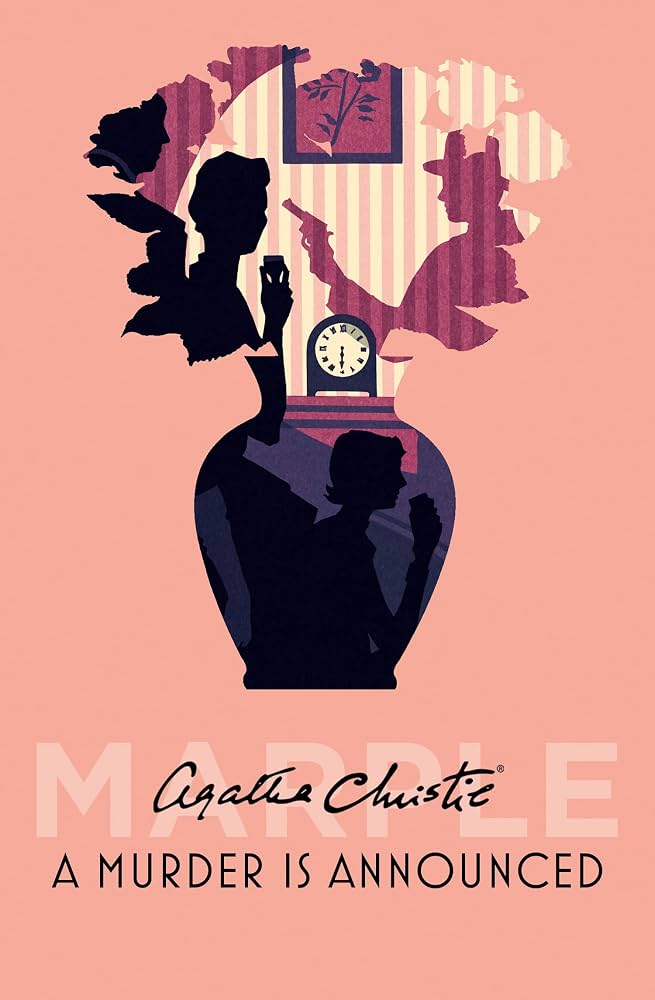
- Plot: A small-ads notice announces a murder at a set hour, and the village turns up expecting a party game.
- Clues: Scrupulously fair and hidden in domestic plain sight: a door, a lamp, a spelling, a cake.
- Reveal: One of Christie’s cleanest. It rearranges everything you thought you knew about the household without cheating.
The opening is one of Christie’s best ideas: a notice in the local paper announcing that a murder will take place at Little Paddocks on Friday evening. Neighbours arrive expecting sherry and a murder game. The lights go out, shots are fired, and a young foreign hotel clerk lies dead in the doorway.
What lifts the book above its premise is its grip on time and place. This is Chipping Cleghorn after the war: rationing still on, servants scarce, strangers settling in every village. Nobody can vouch for anybody any more, and Christie makes that social fact the engine of the mystery. Identity, not alibi, is the real puzzle.
The household is well drawn. Letitia Blacklock is brisk and competent. Her old friend Dora Bunner, flustered and loyal, is one of Christie’s most affecting minor characters, and her fate gives the book a sadness the genre usually avoids. Mitzi, the refugee cook convinced everyone is plotting against her, is played partly for comedy, and modern readers may wince at some of it.
Inspector Craddock does the legwork while Miss Marple listens and notices. The clue-planting is superb. Several decisive hints are so ordinary they read like furniture, and a second reading shows how openly Christie played.
The score stops at 8 because the final confrontation relies on a theatrical trap that feels staged, and the inheritance subplot involves more genealogy than tension. Still, few Christie novels are as fair, as tidy, or as curious about the country that produced them.


Leave a Reply