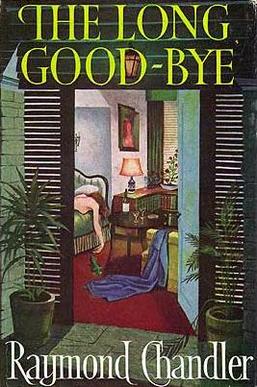
Rating: 10/10
- Plot: Two cases, a friend’s flight to Mexico and a drunk novelist’s troubles, are braided loosely enough that the seams show, and it hardly matters.
- Clues: Scarce and unfair by Golden Age standards; the evidence lies in how people talk and what they avoid saying.
- Reveal: A double ending. The solution arrives, and then the real blow lands afterwards, in a quiet room.
Chandler wrote this while his wife Cissy was dying, and the book knows something about loss that his earlier ones only gestured at. It begins not with a client but with a drunk: Terry Lennox, a man with a scarred face and exquisite manners, whom Marlowe keeps rescuing for reasons he can’t articulate. Their friendship, built over gimlets in a quiet bar, is the book’s real subject. When Lennox’s rich wife is found dead and Lennox flees, Marlowe drives him to Tijuana, then sits in a cell rather than talk.
The second strand, about Roger Wade, a bestselling novelist drinking himself into silence, is where Chandler turns the mirror on himself. Wade’s disgust at writing profitable trash sits uncomfortably close to his author’s, and those passages have a rawness no other Marlowe novel risks.
The prose is slower than in The Big Sleep. Similes still arrive, but fewer are jokes. More are observations about how the wealthy of Idle Valley arrange their lives so that nothing touches them. Marlowe is older, lonelier, and less sure that decency pays. He refuses money he hasn’t earned, and the refusals start to look less like integrity than like a man guarding the one thing he has left.
Readers who want a tight puzzle will find the plotting baggy and the coincidences convenient. That complaint is fair and doesn’t dent the score. This is the rare crime novel whose final pages are about friendship rather than guilt, and they hit harder than any solution could.


Leave a Reply