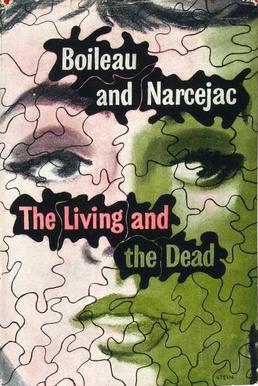
Rating: 7/10 · Translated from French
- Plot: A former policeman is hired to watch an old friend’s wife, who seems possessed by a dead ancestor. He falls in love, and she dies.
- Clues: In plain sight, though the obsessive narration makes them easy to dismiss.
- Reveal: Cleverly prepared and bleaker than Hitchcock’s; unlike the film, the novel keeps its secret to the end.
Roger Flavières is a lawyer who left the police after his fear of heights played a part in a colleague’s death. In Paris in 1940, with the German invasion approaching, an old school friend asks him to follow his wife, Madeleine. She drifts through the city as if in a trance and seems drawn to a great-grandmother who killed herself.
Flavières follows her, pulls her from the Seine, and falls in love. Then she falls from a church tower he cannot bring himself to climb. Years later, after the war, he glimpses a woman who looks like Madeleine and becomes obsessed with remaking her.
Hitchcock’s Vertigo moved the story to San Francisco and changed crucial details, but the core is here: a man who cannot let go of a woman who may never have existed as he imagined her. The novel’s version is more claustrophobic. Flavières is not a romantic hero but a nervous, guilt-ridden man, and the war adds a layer the film lacks. Paris is emptying, the future is dark, and his obsession looks like a refusal to face what is happening around him.
The first half is superb, especially the long pursuits through the city. The second half, after the Liberation, is weaker. The machinery of the plot becomes visible, and Flavières’s behaviour grows repetitive rather than more intense.
The final twist works, and it is harsher than Hitchcock’s ending. But where She Who Was No More is almost perfect, this one feels a little stretched.
The 7 reflects a strong idea and a haunting atmosphere, slightly undercut by the second half. Admirers of Vertigo will enjoy seeing the original blueprint, and readers who don’t know the film may enjoy the surprise even more.


Leave a Reply