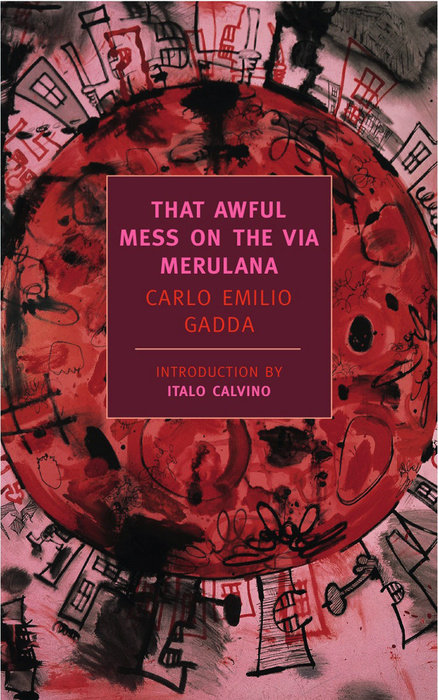
Rating: 8/10 · Translated from Italian
- Plot: In 1927 Rome, a jewel theft and then a brutal murder strike the same apartment building on the Via Merulana.
- Clues: Abundant and genuine, but they multiply faster than the detective can organise them.
- Reveal: Deliberately withheld; the book stops at the edge of a solution and declines to step over.
Don Ciccio Ingravallo, a detective from Molise in the Rome police, believes crimes never have a single motive, only a knot of causes. That idea, stated early, is Gadda’s method. The theft of a countess’s jewels and the murder of Liliana Balducci, a wealthy, childless woman Ingravallo quietly admires, become entry points into an entire society.
It is 1927 and Mussolini’s regime is settling in. Gadda, a trained engineer, loathed Fascism, and the novel mocks its bombast, its bureaucracy and its fetish for order. The chase leads out of Rome into the Castelli Romani, through villages, farmyards and poor households, and the book becomes a panorama of the Italy the regime claimed to have tidied up.
The language is the thing. Gadda mixes Roman, Neapolitan, Venetian and Molisan dialect with high literary Italian, scientific jargon and Latin tags. Sentences sprawl, digress and loop back. William Weaver’s English version is a heroic salvage, though some texture inevitably goes. The effect is exhilarating when it works and exhausting when it doesn’t.
As a mystery, it breaks the rules. The book ends just short of confirming the culprit. Some readers find that infuriating; others see it as the point, a crime novel about the impossibility of reducing the world to one explanation.
The 8 reflects real brilliance alongside real difficulty. It is not for anyone who wants a clean solution. But for readers curious about what the crime novel can do as literature, it is essential, and it anticipates the postmodern mysteries of Umberto Eco by a generation.


Leave a Reply