Rating: 7/10 · Translated from Japanese; English edition 2003
- Plot: A silk magnate’s will sets his three grandsons and a beautiful outsider against one another, and the heirs start dying.
- Clues: Fair and theatrical, including a masked survivor whose identity is the central question.
- Reveal: Elaborate and satisfying, if it asks you to accept a good deal of coincidence.
Sahei Inugami, who built a silk fortune in a lakeside town in the mountains of Nagano, dies leaving a will that all but guarantees murder. The estate goes to Tamayo, granddaughter of his old benefactor, but only if she marries one of his three grandsons. The grandsons’ mothers, his daughters by three different mistresses, loathe one another and her.
Into this walks Kosuke Kindaichi, Yokomizo’s rumpled, stammering detective, who scratches his head in a shower of dandruff when he thinks. One grandson, Sukekiyo, has come home from the war with his face hidden behind a rubber mask, and nobody can be sure he is who he says he is. Bodies then turn up posed in grotesque tableaux linked to the family heirlooms.
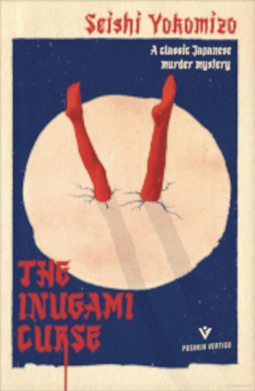
Yokomizo loved Western Golden Age mysteries, especially John Dickson Carr, and wrote Japanese versions full of old houses, family curses and staged corpses. This is the best known of them. Its images, above all a pair of legs jutting from a frozen lake, have passed into Japanese popular culture through repeated film and television versions.
The setting carries history too. The war has just ended, soldiers are coming home damaged or not at all, and the old rural families are losing their grip. The masked Sukekiyo stands for a society unsure what it has become.
As a novel it has limits. Characters are types, dialogue is formal and melodramatic, and the plot needs several unlikely overlaps of timing. Readers used to understatement may find it overheated.
The 7 reflects that trade-off. As puzzle and gothic spectacle it is great fun, and as a window on postwar Japan it is fascinating. It is also the ideal way into a whole tradition of Japanese detective fiction that English readers largely missed until recently.


Leave a Reply