Rating: 5/10
- Plot: Mike Hammer picks up a terrified woman on a night highway, survives an attempt on his own life, and goes after the Mob with or without official blessing.
- Clues: Largely irrelevant. Hammer gets answers by hitting people until they talk.
- Reveal: A late twist that is signposted early and delivered in Spillane’s usual register: sudden, violent and moralising.
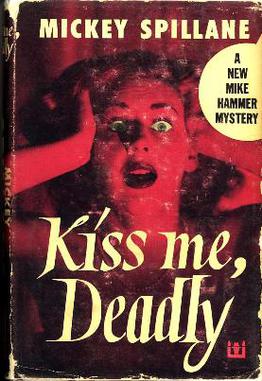
No mystery writer of the 1950s sold like Mickey Spillane, and Kiss Me, Deadly shows both why and why the popularity faded. It opens superbly. Hammer, driving at night, nearly runs down a frightened woman on the road. Soon she is dead, Hammer is beaten, and an attempt is made on him that is meant to look like an accident.
He answers with rage. The police, federal agents and the Mafia all tell him to back off, and he doesn’t. With his loyal secretary Velda, he works through a roster of hoodlums, informers and glamorous women, hunting the link between the dead woman and a hidden key.
Spillane’s prose is the real subject. Sentences are short and blunt. Hammer’s inner voice is a steady boil of fury at crime, weakness and a law that fails. The action scenes have real momentum, and there is a paranoid sense of surveillance and rot that suits the decade.
But it is exhausting. Women exist to be desired, killed or punished, and the sexual politics are crude even for 1952. Hammer’s self-righteousness wears thin, especially as his methods are indistinguishable from the villains’. The plot depends on him walking into the right room at the right moment.
Compare Robert Aldrich’s 1955 film, which kept the title, treated Hammer as a brute, and swapped the narcotics plot for a glowing box that ends the world. The film is now a noir landmark; the novel is mostly a period piece.
The 5 reflects a book that matters historically, thrills in patches, and is hard to enjoy without irony.recently.


Leave a Reply