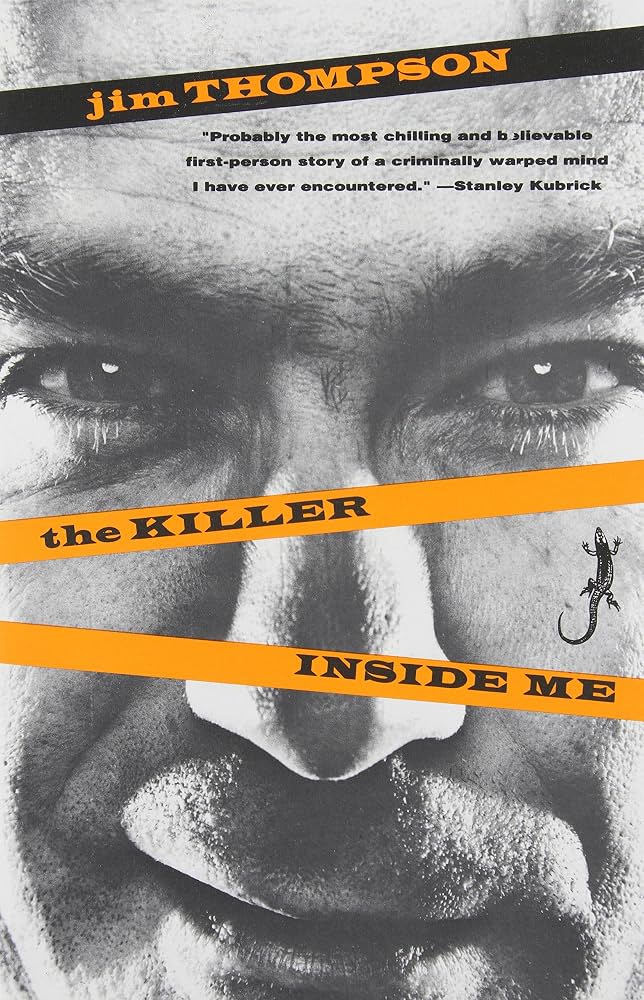
Rating: 8/10
- Plot: A small-town deputy’s hidden compulsion breaks the surface after one act of violence, and each cover-up needs another.
- Clues: You know the killer from page one; the tension lies in who else is quietly working it out.
- Reveal: An apocalyptic last chapter, plus a late turn about who knew what, and for how long.
Lou Ford, deputy sheriff of Central City, Texas, talks in platitudes. He tells people the early bird catches the worm, and they take him for a dull, decent sort. The platitudes are a mask and a private joke. Behind them sits what Lou calls “the sickness”, an urge to hurt that he has kept buried for years.
Thompson wrote it as a paperback original for Lion Books, and it moves at that market’s speed. But the first-person voice is far more sophisticated than its packaging. Lou is articulate, has read the psychiatry books in his late father’s study, and is funny in a way that makes you complicit before you notice. By his first killing, you’ve spent too long in his head to step out cleanly.
The book needs a warning. The violence against women is described in close, brutal detail, and Thompson doesn’t make it easy to see where the character’s misogyny ends and the novel’s begins. Some readers will find the line clearly drawn; others won’t. That discomfort is part of its force and also its limit.
The 8 is for the voice. Lou’s narration slides between folksy charm and cold calculation, sometimes inside one sentence, and the effect is disorienting in the best sense. The town, with its oil money, union trouble and debts everyone knows about, is drawn with real economy.
Stanley Kubrick called it about the most chilling and believable portrait of a warped criminal mind he had read. The book is more precise than even that suggests. It frightens because it is calm.


Leave a Reply