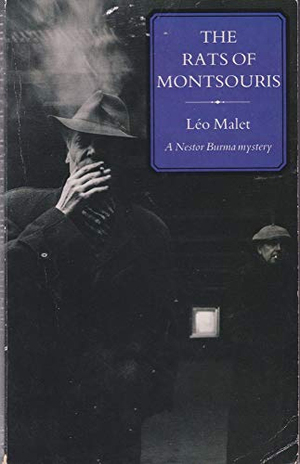
Rating: 6/10 · Translated from French; English edition decades later
- Plot: Private eye Nestor Burma is pulled by a figure from his past into a gang’s affairs, a robbery and a corpse in Paris’s 14th arrondissement.
- Clues: Scattered and secondary; atmosphere matters more than deduction.
- Reveal: Adequate, but the solution matters less than the ride.
Léo Malet was an anarchist, a Surrealist poet in André Breton’s circle, and a prolific writer of crime fiction who hit on an unusual project. His detective, Nestor Burma, a Paris private eye with a pipe carved like a bull’s head, would solve a case in each of the city’s twenty arrondissements. Malet completed fifteen of them in the 1950s under the collective title The New Mysteries of Paris, a nod to Eugène Sue.
This one is set in the 14th, around the Parc Montsouris, among workshops, rail yards and cheap hotels. A face from Burma’s anarchist youth draws him in, and the trail leads to a gang, a planned robbery, a killing, and the usual cast of cops, informers and women who know more than they say.
Burma’s voice is the chief pleasure. He is cynical, usually broke, fond of wordplay and slang, and genuinely tender toward the shabbier corners of Paris. Malet’s city is the underside of the postcard one: tenements, bistros, fog and railway cuttings. The Surrealist streak surfaces in odd images and a sense that the city’s geography follows a logic of its own.
The problem is structure. The plot is loose and runs on convenient encounters, with much depending on Burma bumping into the right person. Translation also struggles with his argot, and some of the jokes and flavour inevitably evaporate.
The 6 reflects a book more interesting as a series entry and a portrait of a neighbourhood than as a mystery. Malet is best read in sequence, as a walking tour of 1950s Paris seen from below. Taken alone, this is a pleasant but minor stop.is escapes lean on official incompetence. The ending more than recovers. The novel won France’s Grand Prix de Littérature Policière and led to four sequels.


Leave a Reply