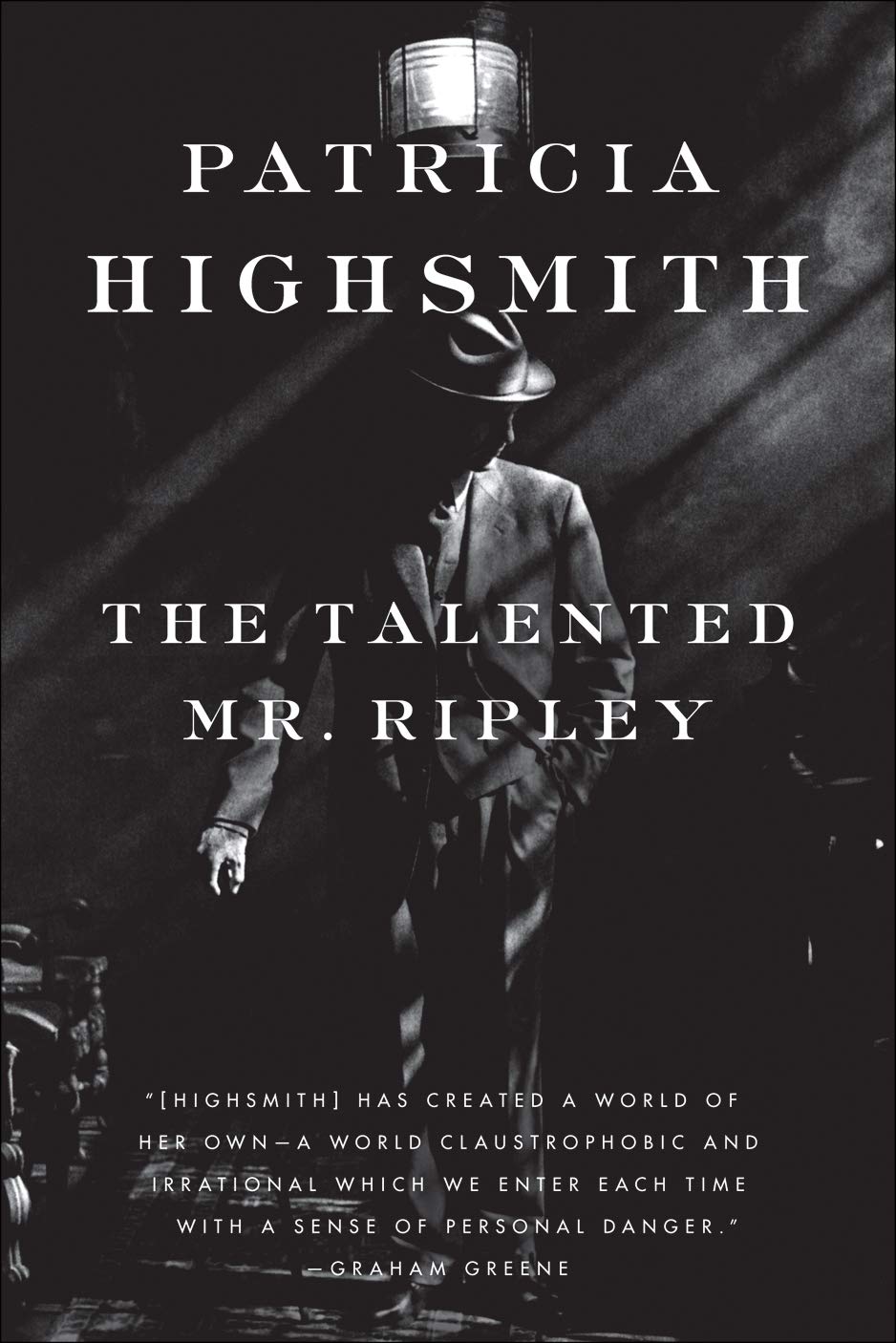
Rating: 9/10
- Plot: A simple errand, fetching a rich man’s son home from Italy, curdles into impersonation, and every chapter tightens the knot.
- Clues: Inverted: you watch every mistake Tom makes, which turns clue-spotting into dread.
- Reveal: No unmasking at all. The ending withholds the punishment the genre trained you to expect, and that absence is the shock.
Highsmith hands the detective’s job to the reader and then makes the reader an accomplice. Tom Ripley, a small-time New York chancer, is paid by Herbert Greenleaf to persuade his son Dickie to leave the Italian village of Mongibello and come home. Tom goes, studies Dickie, wants his life, and eventually takes it.
The book works because Highsmith refuses to dramatise. Her sentences are flat, practical, almost administrative. Tom counts traveller’s cheques, practises Dickie’s signature, and frets over which rings a man like Dickie would wear. The violence gets the same bookkeeping calm, which unsettles far more than lurid description would.
Tom’s inner life is a study in envy and self-invention. He is ashamed of his past, alert to every social slight, and capable of real delight in Venetian light and good tailoring. Highsmith lets you share that delight, and at some point you notice you want him to get away with it. That complicity is the novel’s achievement, and it is why Ripley outlived nearly every other crime protagonist of the decade.
There is a queer undercurrent Highsmith leaves unresolved. Tom’s attachment to Dickie is part desire, part covetousness, and the book is sharper for not deciding which. Marge Sherwood, Dickie’s girlfriend, gets a rough portrait, closer to contempt than characterisation.
It misses a perfect score because the middle stretch in Rome and Venice slackens as Tom juggles police inquiries, and a couple of his escapes lean on official incompetence. The ending more than recovers. The novel won France’s Grand Prix de Littérature Policière and led to four sequels.


Leave a Reply