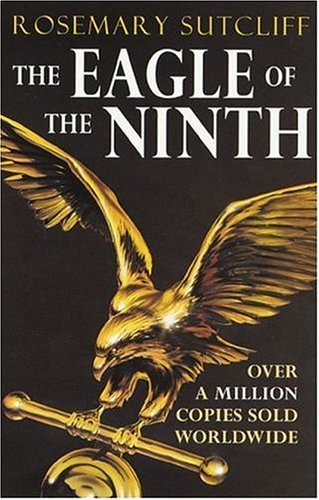
Rating: 8/10
- Accuracy: Built on two real puzzles: a wingless bronze eagle dug up at Silchester, and the Ninth Legion’s disappearance from the record. Later evidence has undercut the second.
- Readability: Clean, lucid prose that works for adults and children alike.
- Plot: A straightforward quest beyond Hadrian’s Wall, with a strong friendship at its centre.
Marcus Flavius Aquila, a young centurion invalided out after a wound, is recovering at his uncle’s house in Calleva when he hears a rumour. The eagle standard of the Ninth Legion, which his father commanded before the legion vanished in the north, is said to be kept in a tribal shrine beyond the Wall. With Esca, a British former slave he has freed, Marcus sets out to bring it back.
Sutcliff wrote for young readers but never talks down. Her sentences are unhurried and exact, and she is especially good on landscape: heather, mist, rain, the smell of peat smoke. The relationship between Marcus and Esca, master and slave turned friends, is handled with care, and their different ideas of honour, Roman and British, are allowed to stand side by side.
The premise joined two sources. A wingless Roman eagle was found at Silchester in the nineteenth century, and the Ninth’s disappearance from the records had long invited theories. Since the novel appeared, inscriptions and tile stamps from Nijmegen in the Netherlands have suggested the legion was moved out of Britain rather than wiped out there, which makes the premise less likely than it once seemed.
That doesn’t damage the novel, which is about loyalty, belonging and what a lost symbol means. Its army life feels inhabited, and its view of the northern tribes is respectful rather than exotic.
The 8 reflects a simple plot and somewhat thin villains. But among historical novels for young readers, few have aged as gracefully, and adults who come to it late tend to wish they hadn’t waited.nerous and well informed, and the book remains a touchstone for the genre.


Leave a Reply