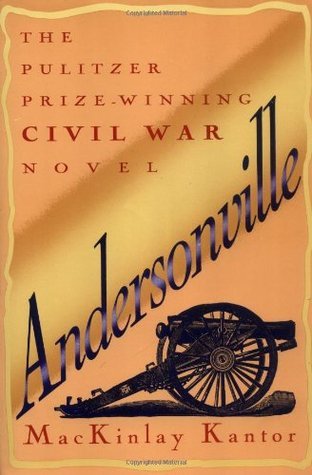
Rating: 7/10
- Accuracy: Deeply researched, with real figures such as Captain Henry Wirz and real events like the prisoners’ trial of the Raiders.
- Readability: Heavy going: a very large cast, shifting viewpoints and more than 700 pages.
- Plot: Diffuse by design; the camp is the protagonist, and the story is its growth and collapse.
Camp Sumter, the Confederate prison near Andersonville, Georgia, held about 45,000 Union soldiers in its fourteen months, and nearly 13,000 of them died. Kantor spent decades thinking about the place and produced a novel as large and crowded as the stockade.
Instead of one hero, he moves among dozens of characters. Some are prisoners: farm boys, immigrants, thieves, and men trying to keep their dignity with nothing. Others are guards and officials, including Henry Wirz, the commandant hanged after the war. A thread follows Ira Claffey, a planter living near the camp who watches, sickened, as it fills.
The best passages stay with you. The prisoners’ own court, which tries and hangs a gang of predators known as the Raiders, is written with real moral complexity. Kantor is also good on what hunger, filth and exposure do to body and mind, without sensationalising them.
He takes care not to make the Confederacy simply monstrous. Claffey and others stand for a South capable of compassion but unable to act on it. Some readers will find this fair; others will think it too generous to officials whose neglect killed thousands.
The problem is proportion. Many threads start and are dropped. The prose slides into dialect and long catalogues, and it is easy to lose track of who is who. Without a narrative arc, momentum is hard to sustain.
The Pulitzer it won in 1956 rightly honoured its research and moral seriousness. The 7 reflects the reading experience: important, often powerful, and at times a trial.


Leave a Reply