Rating: 7/10
- Accuracy: Strong on the founding of the Metropolitan Police in 1829 and the public suspicion the new force faced.
- Plot: A modern Scotland Yard detective steps out of a taxi into 1829 and finds himself leading a murder inquiry.
- Clues: Carr’s impossible-crime craft: a woman shot where no one seems able to have fired.
- Reveal: Clever, though it depends on a mechanism some readers will find contrived.
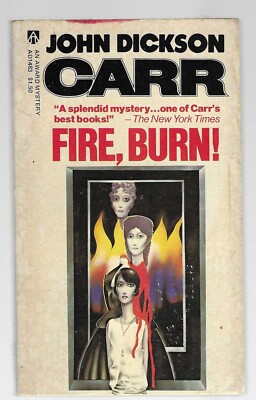
Superintendent John Cheviot of Scotland Yard climbs into a taxi in the 1950s and steps out in 1829. He has the same name and a similar job, but he is now a senior officer in the newly created Metropolitan Police, in a city that distrusts policemen and still prefers the Bow Street Runners.
Almost at once there is a murder: a young woman shot during an evening gathering, in circumstances that look impossible. Cheviot must investigate with methods no one around him understands, while hiding where he comes from.
This is one of Carr’s most enjoyable historicals because the time-slip serves the subject. Cheviot’s modern habits expose the strangeness of early policing, from the absence of forensic tools to class snobbery and political meddling. Carr clearly relished the research, and his notes show how much of the police history is real.
The puzzle is vintage Carr, with an impossible problem and plenty of misdirection. The solution is logical but rests on a trick that some will find ingenious and others artificial.
There is also a romance with Flora Drayton, typical of Carr’s historicals: intense, fast and not entirely convincing. The fight scenes are energetic but follow a formula.
The 7 reflects a well-built, entertaining book, lighter than The Devil in Velvet but more disciplined. For readers interested in police history, it is the most rewarding of Carr’s time-slip novels.


Leave a Reply