Rati.Rating: 6/10
- Accuracy: Broadly grounded in the real waves of settlement, but built from composite families and fictionalised episodes; its portrayal of Native Hawaiians has drawn criticism.
- Readability: Plain sentence by sentence, but daunting at around 900 pages.
- Plot: Linked sagas across more than a thousand years, from volcanic birth to statehood.
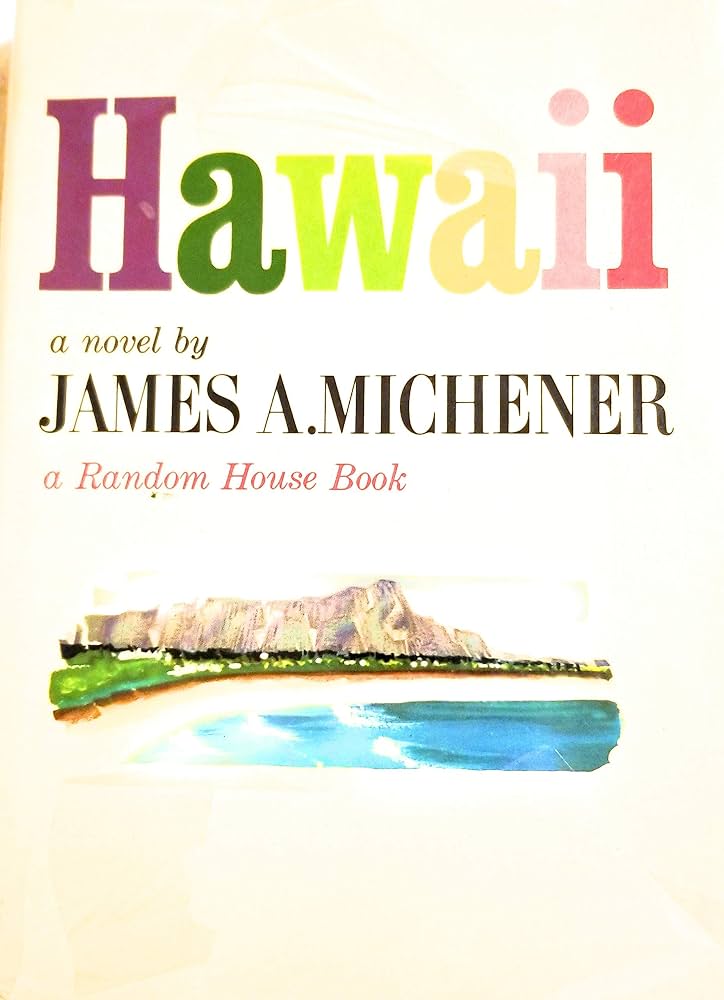
Hawaii begins with the formation of the islands, a geological overture in which rock climbs out of the sea and waits for life. It then moves through a Polynesian voyage from Bora Bora, New England missionaries in the 1820s, Chinese and Japanese labourers, and finally the mixed society that became the fiftieth state in 1959, the year the book appeared.
Michener builds history through families, introducing a new group in each section and following descendants. It is an effective way to show change over time, and some sections are tense and vivid. The Polynesian voyage carries a real sense of danger and faith. The missionary section, with the rigid Abner Hale and his patient wife Jerusha, is the book’s most famous and gives a layered picture of well-meaning cultural destruction.
The later sections are weaker. As the present approaches, characters turn into representatives of ethnic groups or economic forces, and dialogue into exposition. The Chinese matriarch Nyuk Tsin is a memorable exception, but the Japanese sections and final chapters feel rushed despite their length.
Accuracy is mixed. Michener researched widely and gets many processes right, from sugar plantations to missionary politics. But his characters are invented composites, and Native Hawaiian scholars have criticised the book for centring outsiders and treating Hawaiian culture chiefly as something lost.
The 6 reflects an ambitious, often absorbing book whose formula works better in its first half. It remains a decent entry point to Hawaiian history, provided readers remember it is a novel.


Leave a Reply