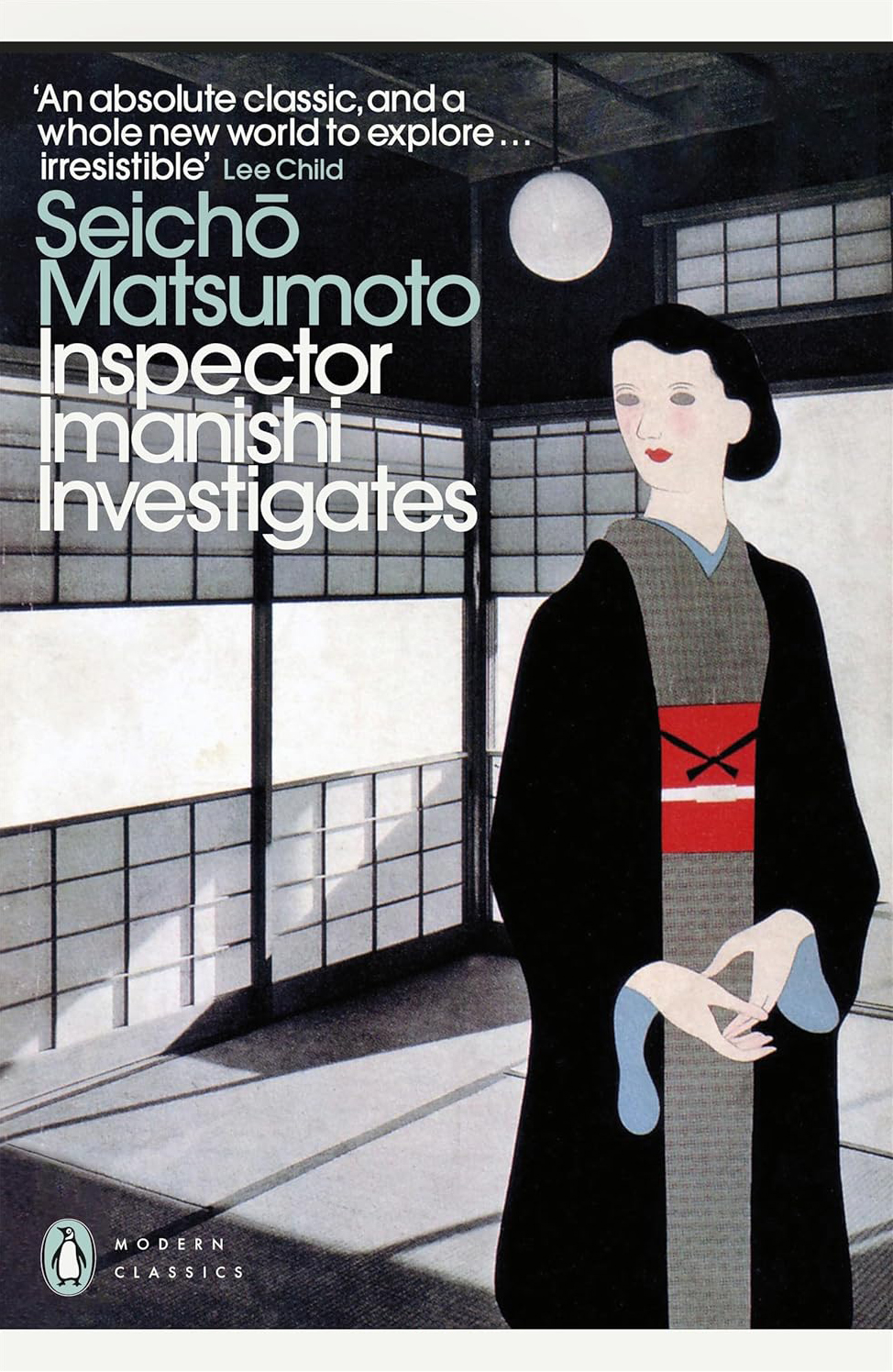
Rating: 7/10 · Translated from Japanese; English edition 1989
- Plot: A battered body in a Tokyo rail yard, and a dialect overheard in a bar, send a patient detective across Japan.
- Clues: Superb and linguistic: a word misheard, a regional accent, a place name that is not what it seems.
- Reveal: Moving and socially pointed, though it arrives after a very long approach.
- Science bonus: The breakthrough is linguistic science, as dialect geography shows that a remote western dialect shares sound features with northern speech, and it redirects the whole inquiry.
A man is found beaten to death in a rail yard at Kamata in Tokyo. The night before, he was seen drinking with a younger companion, and a barmaid recalls them speaking in a northern dialect and mentioning the word Kameda. That is all Inspector Imanishi has.
Imanishi is the least flashy detective imaginable. He grows bonsai, writes haiku, worries about his salary, and takes overnight trains to distant towns on hunches that mostly come to nothing. His persistence is the book’s engine, and Matsumoto makes it quietly heroic.
The central clue is brilliant. Imanishi learns from a linguist that a dialect spoken far from the north sounds almost identical to northern speech, which opens a new line of inquiry. That kind of patient, knowledge-based deduction is Matsumoto’s signature.
Running alongside is a portrait of Tokyo’s avant-garde, a group of ambitious young artists, critics and musicians eager to reject the old Japan. Matsumoto regards them with scepticism, and the novel becomes a study of what people bury in order to reinvent themselves. The eventual solution touches on prejudice and a concealed childhood, and it carries real emotional weight.
The drawback is pace. At over 300 pages of dead ends, the investigation can grind, and some plot devices, including an exotic murder method, feel dated. The English translation, arriving nearly thirty years late, is serviceable.
The 7 reflects a deeply humane procedural with a clever core and a saggy middle. The 1974 film, Castle of Sand, is considered a Japanese classic.


Leave a Reply