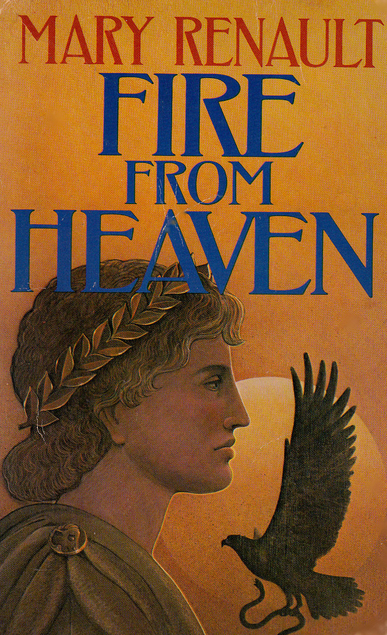
Rating: 8/10
- Accuracy: Faithful to the ancient sources on Alexander’s youth, with interpretation where they are thin; Renault’s readings of Philip and Olympias are strong but contestable.
- Readability: Vivid and fluent, though the dense Macedonian politics require attention.
- Plot: Alexander’s childhood and youth, from the rivalry of his parents to the assassination that makes him king.
- Science bonus: Aristotle’s teaching at Mieza, including natural history and systematic inquiry, is shown shaping the young Alexander’s mind.
Alexander grows up between two formidable parents. His father, Philip II of Macedon, is a brilliant general and ruthless politician. His mother, Olympias, is proud, passionate and devoted to serpent-worshipping religious cults. Their bitter rivalry shapes the boy.
Mary Renault follows Alexander from early childhood through his education under Aristotle, his friendship with Hephaistion, his first military command, and the battle of Chaeronea, where Macedon defeated Athens and Thebes. The novel ends in 336 BC, with Philip’s assassination and Alexander’s accession.
Renault writes the young Alexander as extraordinary from the start, gifted, charismatic, precociously intelligent, and deeply affected by his mother. Her portrait of Hephaistion’s love and loyalty is tender and frank, and it established a view of their relationship that has influenced many later writers.
The politics of the Macedonian court are dense and occasionally confusing, but Renault handles them with skill. The battle scenes are vivid, especially Chaeronea.
The weakness is idealisation. Renault admires Alexander so much that his flaws are softened, and Philip is sometimes treated more harshly than the evidence supports. Some critics find her Alexander too perfect to be fully human.
The 8 reflects a strong and influential novel, the first of her Alexander trilogy, which continued with The Persian Boy and Funeral Games. It is less taut than The King Must Die, but more ambitious in scope.


Leave a Reply