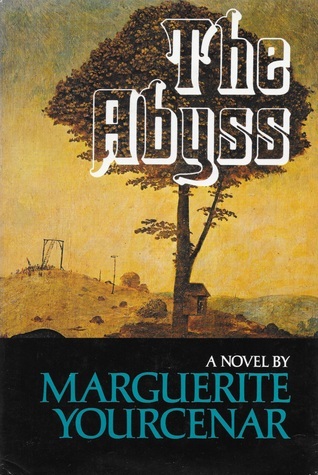
Rating: 8/10 · Translated from French (original title L’Œuvre au noir); English edition 1976
- Accuracy: Deeply informed on sixteenth-century Flanders, the Reformation and early science; Zeno is invented but built from many real physicians and philosophers.
- Readability: Dense and meditative, with long intellectual passages and relatively little action.
- Plot: Zeno, an illegitimate son of a Bruges family, becomes a physician, alchemist and freethinker, and eventually faces the Inquisition.
- Science bonus: Zeno is a physician, anatomist and experimenter who trusts observation over authority, and his clash with the Inquisition is the clash of empirical inquiry with dogma.
Zeno is born in Bruges in 1510, the illegitimate son of a wealthy family’s daughter and an Italian prelate. Intended for the Church, he chooses medicine, alchemy and philosophy instead, and spends his life wandering Europe as a physician, experimenter and writer whose ideas bring him into danger.
Marguerite Yourcenar, author of Memoirs of Hadrian, conceived him as a composite of the great minds of the late Renaissance: Paracelsus, Servetus, Campanella, Giordano Bruno and others. He is a man who questions everything and trusts only observation.
The novel follows him across decades and borders, but its centre is the last part, when he returns to Bruges under a false name to work as a doctor in a monastery. The Inquisition closes in, and Zeno must decide whether to recant.
The French title refers to the alchemical process of dissolution, and the novel is ultimately about the dissolution of certainty, identity and the self. Zeno’s reflections on the body, death and knowledge are among the most profound passages Yourcenar wrote.
The drawback is that Zeno is less intimate than Hadrian. He is observed as much as he speaks, and the long philosophical meditations can feel remote. Readers wanting narrative momentum will struggle.
The 8 reflects a magnificent but demanding novel that won the Prix Femina. It is a companion to Memoirs of Hadrian rather than its equal, but few historical novels take ideas this seriously or render a life of the mind this fully.


Leave a Reply