Rating: 7/10
- Accuracy: Pleasantly evocative of Edwardian society, with its manners, dress and scandals, though the history is backdrop more than subject.
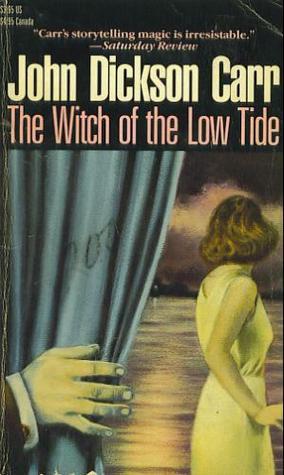
- Plot: A woman is found dead in a beach pavilion surrounded by smooth, unmarked sand, and suspicion falls on the woman the narrator loves.
- Clues: Carr’s specialty: an impossible crime, with the clues hidden in plain sight.
- Reveal: Clever and characteristic, if slightly mechanical.
- Science bonus: The impossible crime is solved by physical reasoning about tide, sand and footprints, with a physician narrator applying medical knowledge.
In 1907 Dr David Garth, a London physician, is in love with Betty Calder, a woman with a mysterious past. When another woman is found strangled in a bathing pavilion on the shore, with no footprints but the victim’s in the wet sand, suspicion falls on Betty.
This is Carr in his Edwardian mode, a period he loved. The novel is full of the texture of the era: motor cars, Harley Street consulting rooms, seaside resorts, scandal and propriety. The romantic tension between Garth and Betty drives the plot.
The impossible crime is the centrepiece, and Carr is at his best in constructing and solving the problem of the footprints. The explanation is fair and ingenious.
The detective, however, is less memorable than Carr’s great series characters, Gideon Fell and Sir Henry Merrivale. The romance is conventional, and the prose occasionally melodramatic.
The 7 reflects a well-crafted impossible-crime mystery with an enjoyable period setting. It is one of Carr’s better later historicals, though not among his very best books.


Leave a Reply