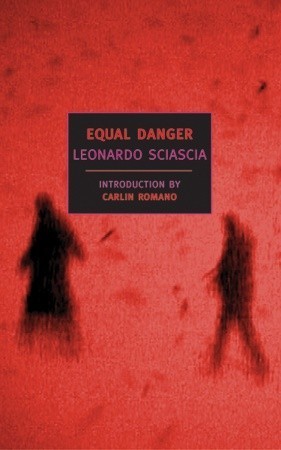
Rating: 8/10 · Translated from Italian (original title Il contesto)
- Plot: Judges are being killed one by one in an unnamed country, and an honest inspector’s theory leads to places the state does not want him to go.
- Clues: Legal and political; each victim’s past rulings point toward a motive.
- Reveal: A bleak, ironic ending about the uselessness of truth in a corrupt system.
In an unnamed country that closely resembles Italy, a prosecutor is murdered. Then a judge. Then another. Inspector Rogas, a thoughtful, cultured policeman, begins to suspect that the killer is a man wrongly convicted by these judges and now taking revenge.
His superiors prefer a different theory: that the killings are the work of revolutionary groups, which would justify a political crackdown. As Rogas follows his own line, he finds evidence of a wider conspiracy linking the state, the parties and the security services.
Leonardo Sciascia called the book a parody, and it has the abstraction and irony of a fable. The unnamed country allows him to satirise Italy’s political system without being tied to specific events, but the parallels to the strategy of tension, the bombings and plots of the period, are clear.
The novel is short and dense, full of conversations about law, power and justice. Its most famous scene is a meeting between Rogas and a Supreme Court president who argues that the judiciary is infallible because it is sacred.
Its weakness is thinness as fiction. Characters are voices for ideas, and the plot is schematic. Readers wanting a conventional thriller will find it dry.
The 8 reflects a sharp, prophetic political novel that remains disturbingly relevant. Francesco Rosi filmed it in 1976 as Illustrious Corpses.


Leave a Reply