Rating: 9/10
- Accuracy: Faithful to the known movements and decisions at Gettysburg, with inner lives imagined from letters and memoirs.
- Readability: Clear, cinematic and moving.
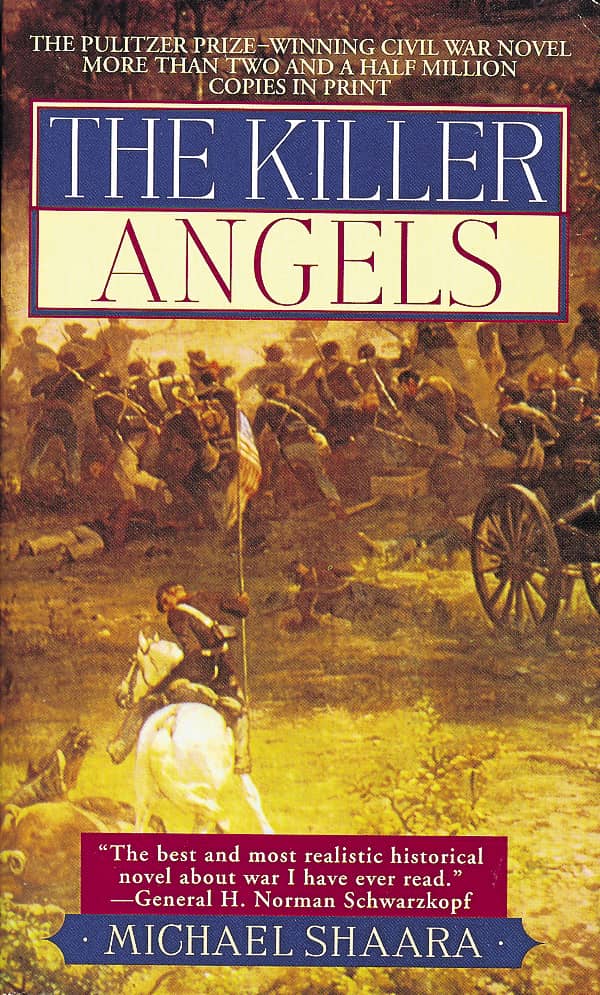
- Plot: The four days of the Battle of Gettysburg, seen through commanders on both sides.
On 30 June 1863 the Confederate army of Robert E. Lee moves into Pennsylvania. Union cavalry under John Buford hold high ground near Gettysburg. Over the next three days, the two armies fight the largest battle of the war.
Michael Shaara tells the story through a few key characters: Lee, calm and increasingly aggressive; James Longstreet, his reluctant corps commander, who opposes frontal attacks; Joshua Chamberlain, a professor from Maine leading a regiment at Little Round Top; and Lewis Armistead, who must fight his friend Winfield Hancock.
The novel makes the battle comprehensible. Maps and short chapters show the plans, while character-focused scenes show the fear, exhaustion and courage. The defence of Little Round Top and Pickett’s Charge are superbly written.
Shaara’s portrayal of Lee has been criticised for romanticising him, and his treatment of slavery and the causes of the war is relatively limited. The Confederates are seen as honourable men fighting a tragic war, which reflects the Lost Cause tradition more than modern scholarship.
The 9 reflects a Pulitzer Prize-winning novel that is among the best war fiction ever written, powerful and accessible. It inspired the 1993 film Gettysburg, and his son Jeff Shaara continued the story in other books.


Leave a Reply