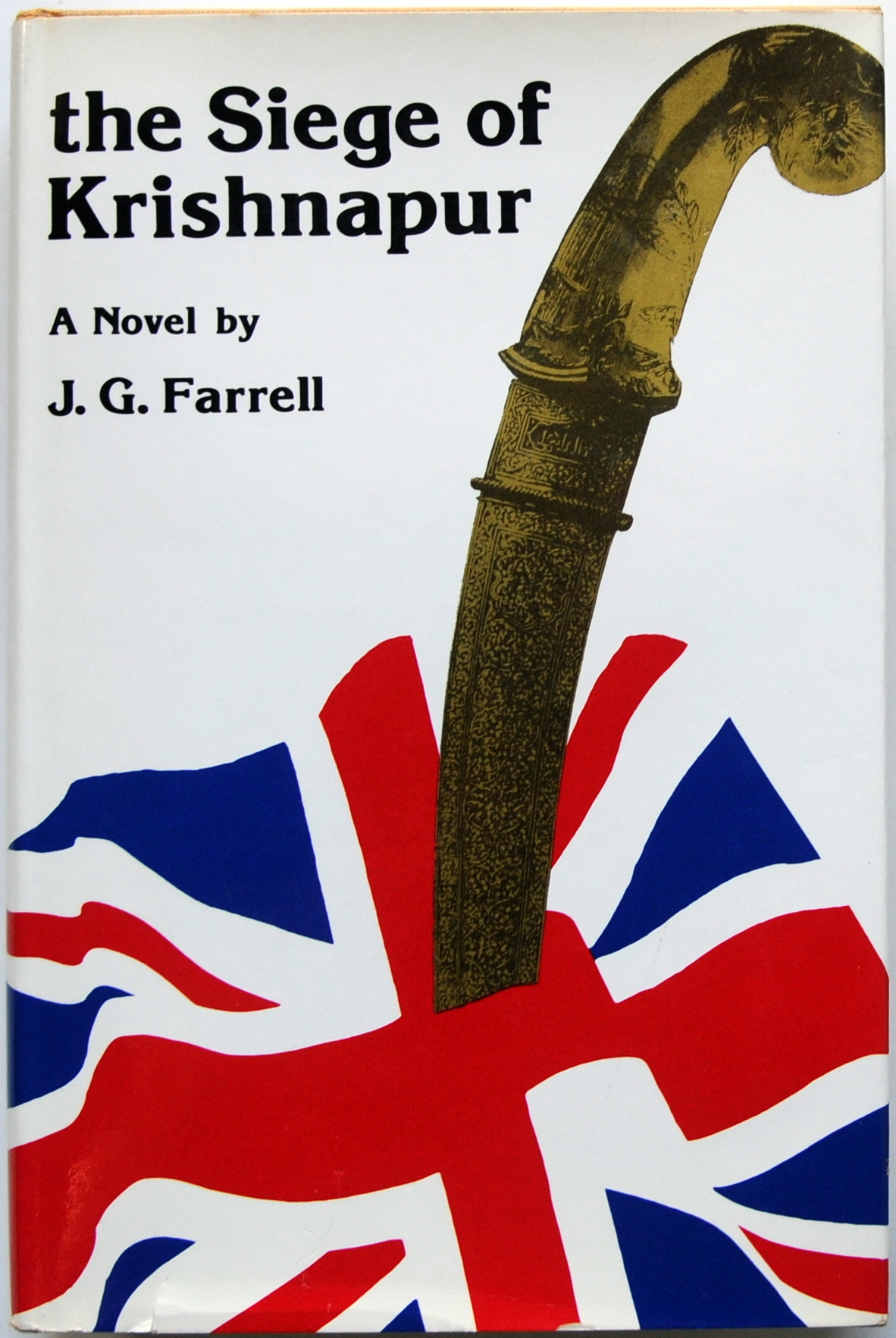
Rating: 9/10
- Accuracy: Closely modelled on real sieges of 1857, especially Lucknow, with details drawn from diaries and memoirs.
- Readability: Elegant, ironic and often very funny, despite grim subject matter.
- Plot: When sepoys rise in 1857, the British community of a small Indian station takes refuge in the Residency and endures a long siege.
- Science bonus: The rival doctors’ battle over cholera, contagion against miasma, is one of the book’s great set pieces, a comic but serious study of how evidence confronts orthodoxy.
Krishnapur is a fictional station in northern India. Its British residents, led by the Collector, Mr Hopkins, live comfortably in a world of Victorian certainties: progress, science, Christianity and the superiority of their civilisation. When the sepoys rebel in 1857, they retreat to the Residency and prepare to defend it.
J.G. Farrell’s novel follows the siege as those certainties are stripped away. Food and water run out, disease spreads, and the residents are forced to use their possessions, including busts of poets and philosophers, as ammunition. Two doctors argue furiously about the treatment of cholera. A young poet, Fleury, and a sentimental young woman discover that romantic ideals do not survive the siege.
Farrell’s tone is ironic and humane. He mocks Victorian pomposity, but he also shows courage and endurance. The comedy and horror are inseparable.
The research is thorough, with details from real accounts of sieges. The Indian rebels are seen mostly from outside, which reflects the British perspective the novel satirises but also limits it.
The weakness is that some characters are types, and the novel’s irony can distance readers from suffering.
The 9 reflects a brilliant, darkly comic novel that won the Booker Prize. It is the central book of Farrell’s Empire Trilogy, with Troubles and The Singapore Grip, and a masterpiece of historical satire.


Leave a Reply