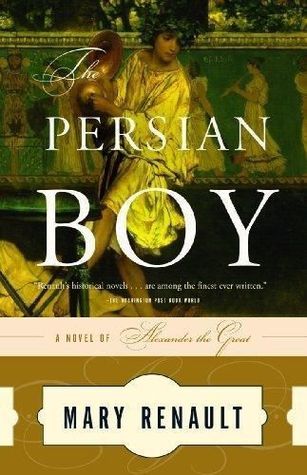
Rating: 8/10
- Accuracy: Faithful to the ancient sources on Alexander’s campaigns in Persia and India, with Bagoas’s inner life invented around the brief historical references to him.
- Readability: Lush and intimate, though the court politics are dense.
- Plot: A Persian boy of noble birth, castrated and sold, becomes the favourite of Darius and then the companion of Alexander.
Bagoas is a Persian boy of good family. After his father is killed in a court intrigue, he is castrated and sold into slavery. He becomes a favourite of King Darius, and after Darius’s fall, he is given to Alexander the Great. He loves Alexander, and he stays with him until Alexander’s death in Babylon.
Mary Renault’s second Alexander novel tells the story of his conquests through the eyes of an outsider. Bagoas is Persian, and his view of the Macedonians is sceptical. He sees their rough manners and their prejudice against Persians. He sees Alexander’s attempt to unite East and West, and his growing isolation.
The novel’s frank portrayal of love between men was unusual for a bestseller, and Renault treats it with seriousness and tenderness. Bagoas’s voice is sensual, wry and perceptive.
The historical detail is rich, from court ceremonies to the march through the Gedrosian desert. Renault’s admiration for Alexander still shapes the book, and some of his cruelty is softened.
The weakness is that Bagoas’s perspective, while fascinating, limits the view of political and military events. The final chapters can feel crowded with history.
The 8 reflects a beautifully written and daring novel, the best of Renault’s Alexander trilogy for many readers. It changed how many people saw Alexander.


Leave a Reply