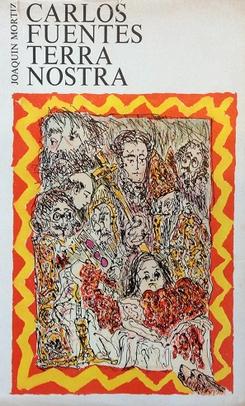
Rating: 6/10 · Translated from Spanish
- Accuracy: Uses real history, especially Philip II and the Spanish conquest, but freely distorts it into myth and fantasy.
- Readability: Extremely demanding, with shifting times, identities and styles.
- Plot: Philip II builds his palace-monastery while mysterious young men with crosses on their backs travel between Spain, the New World and a futuristic Paris.
In 1999 Paris, strange events are happening: women give birth, the Seine boils, a young man with six toes and a cross on his back emerges from the river. The novel then shifts to sixteenth-century Spain, where Philip II, called El Señor, builds a vast mausoleum and seeks to stop time.
Carlos Fuentes’s novel is an enormous attempt to reimagine Hispanic history and culture. It mixes Philip’s court, the conquest of Mexico, heresies, myths and literary figures including Don Quixote and Don Juan. Characters reappear across time.
The novel won the Rómulo Gallegos Prize and was considered a major achievement by many critics. It is certainly a formidable act of imagination, and its passages about power, religion and the conquest can be dazzling.
But it is also exhausting. The plot is almost impossible to summarise, the symbolic structure is dense, and many readers find it more difficult than rewarding.
The 6 reflects a novel of genuine ambition and brilliance that is also frequently impenetrable. Readers who enjoy experimental fiction may rate it far higher. Others should begin with The Death of Artemio Cruz.


Leave a Reply