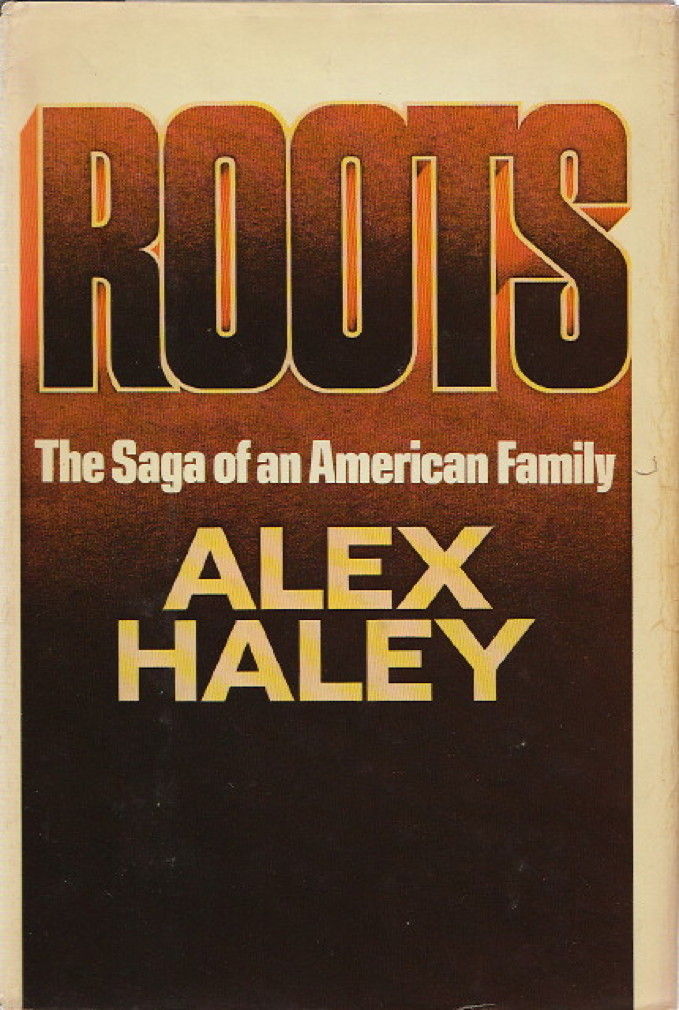
Rating: 6/10
- Accuracy: Presented as family history, but genealogists have challenged many claims, and Haley settled a plagiarism suit over passages taken from another novel.
- Readability: Straightforward and moving.
- Plot: Kunta Kinte is captured in Gambia in 1767, enslaved in America, and his descendants survive slavery and emancipation.
Kunta Kinte, a young man in the Gambian village of Juffure, is captured by slave traders and taken to America. He resists repeatedly and is maimed. His daughter Kizzy is sold away. Her son, Chicken George, becomes a cockfighter. The novel follows the family through generations, ending with Alex Haley himself.
Roots was one of the most important books of the decade. It became a phenomenon, especially after the 1977 television miniseries, and it encouraged millions of Americans, especially Black Americans, to research their ancestry. It received a special Pulitzer citation.
The early chapters in Gambia are vivid, and the depiction of slavery’s brutality is powerful. The family’s stories of survival and resistance are moving.
However, the book’s historical claims were challenged. Genealogists questioned Haley’s research, and the author Harold Courlander sued for plagiarism from his novel The African. Haley settled, acknowledging that some passages came from it.
The prose is plain and sometimes melodramatic, and the later sections are rushed.
The 6 reflects a culturally important and emotionally powerful book whose historical reliability is seriously compromised. It is best read as a novel inspired by family history rather than as history itself.


Leave a Reply