Rating: 8/10
- Accuracy: Superb on the Victorian photography trade, capital punishment and Madame Tussaud’s.
- Plot: A photographer’s wife confesses to poisoning his assistant, but the Home Office asks Cribb to confirm her guilt before she hangs.
- Clues: Excellent and period-based, including details of photographic chemicals.
- Reveal: Clever and moving, with a genuinely surprising twist.
- Science bonus: The poison comes from photographic chemistry, and understanding the darkroom and its chemicals is essential to the solution.
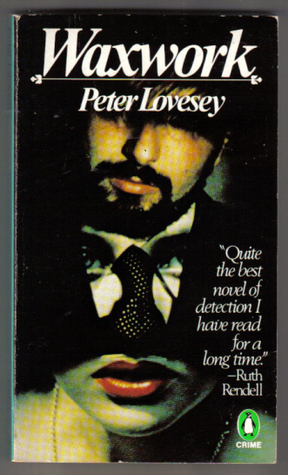
In 1888 Miriam Cromer, wife of a successful photographer, confesses to poisoning his assistant with cyanide, a chemical used in photography. She is sentenced to death. Before the execution, the Home Office asks Sergeant Cribb to check the case. Cribb has less than three weeks.
This is the best of the Cribb novels, and it won the CWA Silver Dagger. Lovesey’s use of Victorian photography is brilliant, and the novel explores the public fascination with murder, embodied by Madame Tussaud’s, where a waxwork of Miriam is prepared even before her death.
The mystery is superbly constructed. Cribb’s investigation reveals a complicated relationship between Miriam and her husband, and the plot keeps shifting.
The novel has a darker, more emotional tone than the earlier Cribb books, and the approaching execution gives it urgency. The hangman is also a character.
The weaknesses are few: some secondary characters are thin, and the ending relies on a slightly convenient revelation.
The 8 reflects an excellent Victorian mystery and one of the finest historical crime novels of the decade.


Leave a Reply