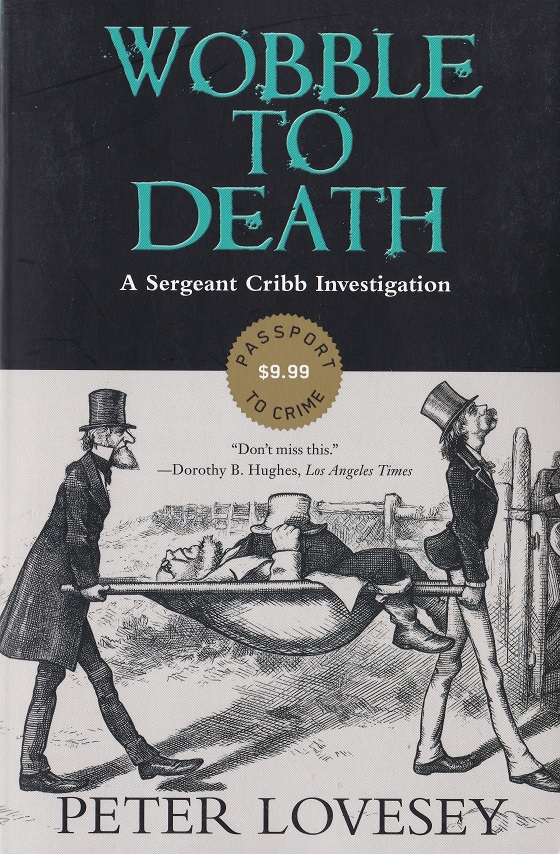
Rating: 7/10
- Accuracy: Excellent on the Victorian craze for pedestrianism, the six-day walking races that drew huge crowds and heavy betting.
- Plot: During a six-day endurance race at a London hall in 1879, a leading competitor collapses and dies, and Sergeant Cribb suspects poison.
- Clues: Fair and grounded in period sport, from training regimes to the food and drink handed to competitors.
- Reveal: Clever and satisfying, if slightly dependent on specialist knowledge.
- Science bonus: The solution depends on Victorian sports physiology and the stimulants and poisons trainers gave exhausted athletes.
In 1879, at the Agricultural Hall in Islington, competitors in a six-day “go-as-you-please” race walk and run around a track in front of betting crowds. One of the favourites dies, apparently of exhaustion. Sergeant Cribb, a sharp, sardonic detective, and his constable Thackeray investigate.
Peter Lovesey won a first-crime-novel competition with this book, and it launched both his career and the modern Victorian mystery. Its genius is the setting. Pedestrianism was a real and extremely popular sport, and Lovesey, a sports historian, describes it with authority: the lap counters, the trainers, the managers, the betting and the grotesque physical suffering.
Cribb is a pleasure: unimpressed by class, dry in humour, and patient in investigation. The book’s comic touches are sharp, and the physical ordeal of the race gives it a bizarre atmosphere.
The mystery itself is solid, with a limited cast of suspects and a clever method. The solution depends partly on knowledge of Victorian medicine and sports.
The weaknesses are thin characterisation of the competitors and a plot that can be repetitive, like the race itself.
The 7 reflects an original and influential debut that paved the way for a whole genre. Lovesey wrote eight Cribb novels, and the series became a television programme in 1980.


Leave a Reply