Rating: 8/10 · Translated from Dutch (original title De Aanslag)
- Accuracy: Grounded in the last winter of the German occupation in Haarlem and in Dutch debates about resistance and collaboration.
- Readability: Short, precise and absorbing.
- Plot: In 1945 a collaborator is shot outside a house in Haarlem, the family that lives there is killed in reprisal, and the surviving son spends decades uncovering the truth.
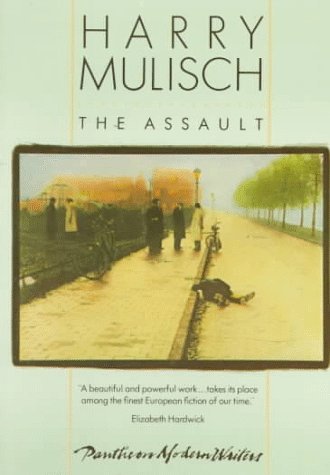
In January 1945, during the Hunger Winter, a Dutch police inspector who collaborated with the Germans is shot by resistance fighters. His body falls in front of a neighbour’s house. The neighbours move it in front of the Steenwijk family’s home. The Germans burn the house and execute the family, except twelve-year-old Anton.
Harry Mulisch’s novel follows Anton through later decades, in episodes set in 1952, 1956, 1966 and 1981. Each episode brings new revelations about what happened that night, from the neighbours who moved the body to the resistance fighter who fired the shots.
The novel explores guilt, responsibility and memory. Who is to blame for the family’s death: the Germans, the resistance, the neighbours? Anton tries to forget, but the past keeps returning.
Mulisch writes with precision and irony. The structure is elegant, and the revelations are handled with suspense.
The weakness is that Anton is somewhat passive, and the later sections can feel schematic.
The 8 reflects one of the most important Dutch novels about the war. Fons Rademakers’s 1986 film won the Academy Award for Best Foreign Language Film.Nobel Prize in 1998.


Leave a Reply