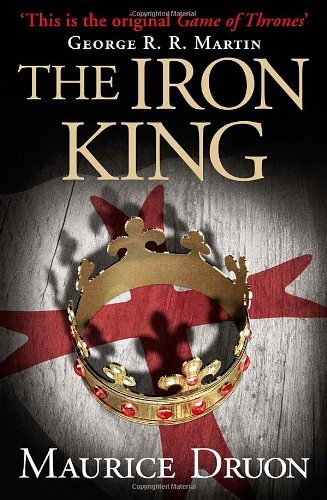
Rating: 8/10 · Translated from French
- Accuracy: Closely based on the chronicles of Philip IV’s final year, with some liberties: Druon keeps the minister Nogaret alive after his real death, for instance.
- Readability: Fast, vivid and full of intrigue, with chapters that often end on a hook.
- Plot: The last Templar grand master curses the king from the stake, and within months the royal family starts to come apart.
In March 1314 Jacques de Molay, grand master of the Knights Templar, is burned in Paris. From the flames he summons King Philip IV and Pope Clement V to answer before God within the year. Both are dead before it is out. Maurice Druon built a seven-volume series on that coincidence.
The Iron King covers the months that follow. Philip, handsome, cold and relentless, rules through ministers and fear. His three sons are married to three princesses of Burgundy, two of whom are conducting affairs in the Tour de Nesle. Philip’s daughter Isabella, the unhappy queen of England, exposes them, and the scandal, trials and punishments shake the dynasty.
Druon worked with a team of researchers, and it shows. The politics of money, the Templar trial and the tension between king and pope are accurately drawn. Yet the book moves like a thriller, full of poison, conspiracy and dark humour. The Lombard banker Spinello Tolomei and the ambitious Robert of Artois give it colour and appetite.
George R.R. Martin has called the series the original game of thrones, and the resemblance is plain: dynastic politics, moral ambiguity, and major characters who die. The difference is that Druon’s events happened.
The weaknesses are those of popular fiction. Characters are drawn broadly, the narrator explains too much, and Humphrey Hare’s translation is serviceable rather than beautiful.
The 8 reflects a propulsive, well-researched opening to a series that remains one of the best ways into medieval French history. Readers who start here usually keep going.


Leave a Reply