Rating: 10/10
- Accuracy: Historians still argue over Tey’s verdict, but her method, ranking contemporary records above later retellings, is sound and still instructive.
- Plot: A detective confined to a hospital bed conducts a four-hundred-year-old inquiry through books, records and conversation.
- Clues: Small, dry, documented facts: an Act of Parliament, a bill of attainder, the movements of a queen’s daughters.
- Reveal: A verdict built from what the records say and, more tellingly, from what they leave out.
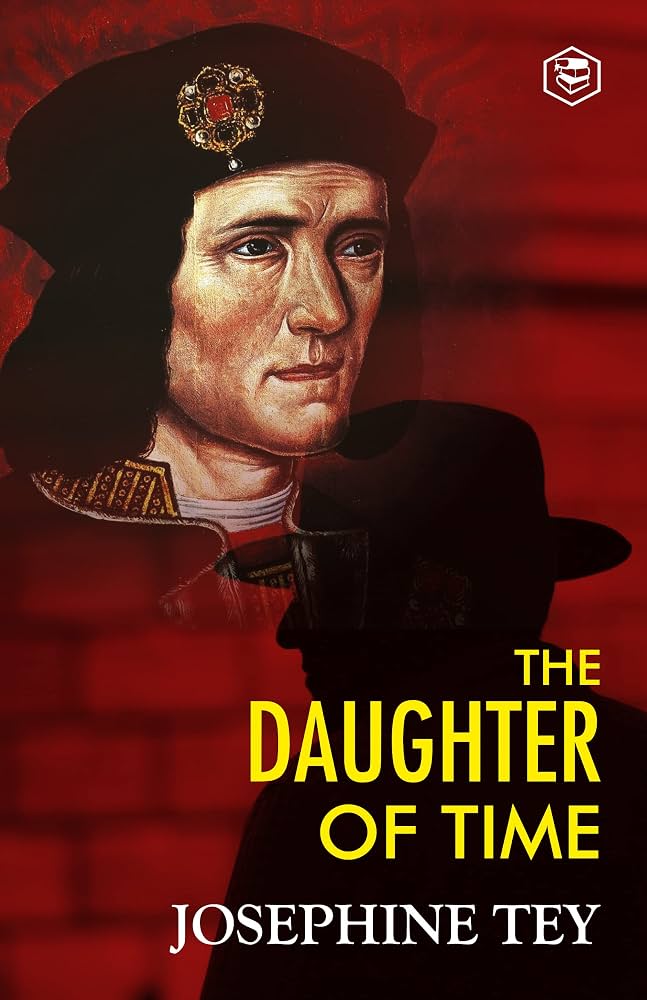
The Daughter of Time is a detective novel about how people come to be wrong. It opens on a clash of judgements. Inspector Alan Grant, laid up in hospital with a broken leg, prides himself on reading faces. Shown an unlabelled portrait, he sees a conscientious, burdened man who belongs on the bench rather than in the dock. Then he learns it is Richard III. Either his instinct is wrong, or four centuries of reputation are.
What follows is a study of failed judgement. Nurses, surgeons and visitors repeat the story of the wicked uncle because everyone always has. Historians copy one another. The founding account of Richard’s villainy comes from Thomas More, who was a small child in 1483 and wrote under the Tudors, probably from what John Morton, Richard’s enemy, told him. Grant treats it as he would a witness repeating hearsay from an interested party. Tey even names the process: a tale everyone believes and the record doesn’t support is a “Tonypandy”, after a Welsh riot that hardened into legend.
Against that, she sets the small, unglamorous document. Grant and his young American researcher, Brent Carradine, turn to the Rolls of Parliament, the act settling Richard’s title, and the bill of attainder Henry VII brought against him, which lists his crimes but says nothing about murdered princes. They note that the boys’ mother made her peace with Richard and sent her daughters to his court. None of these facts is dramatic. Together they outweigh centuries of consensus.
That is the novel’s quiet argument: truth survives in accounts, acts and silences, rarely in the anecdote everyone remembers. Tey is too certain of her conclusion, and historians still contest it. But her method, doubting the popular story and trusting the dull record, is exactly right, and no textbook teaches it as memorably. The Crime Writers’ Association voted it the best crime novel ever written in 1990. It earns the title by making its reader a better judge of evidence.


Leave a Reply